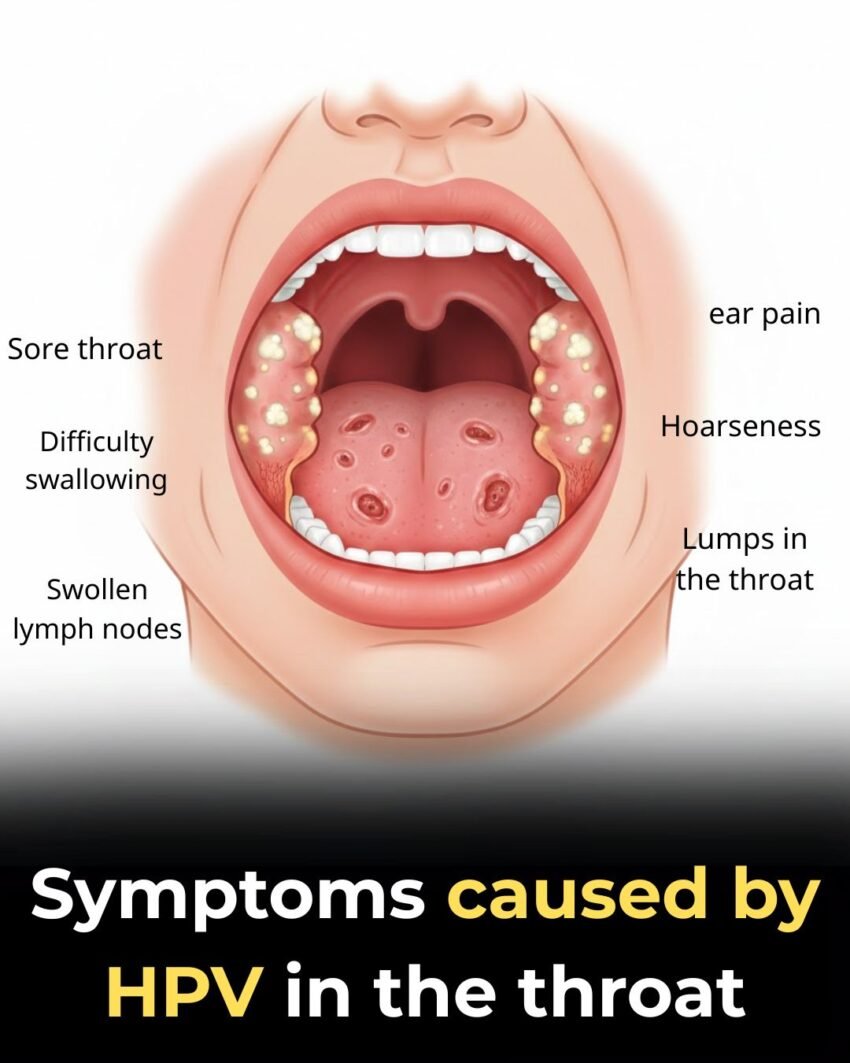
Human Papillomavirus (HPV) can affect the throat and oral cavity, most commonly leading to infections in the oropharynx (back of the throat, tonsils, base of the tongue). While many HPV infections are asymptomatic, some can cause visible signs or lead to serious complications over time. Here’s a detailed guide:
1. Common Symptoms of HPV in the Throat
HPV-related throat infections often do not produce noticeable symptoms initially. When symptoms do appear, they may include:
- Persistent sore throat – lasts longer than a typical cold or infection
- Difficulty swallowing (dysphagia) or a feeling of a lump in the throat
- Hoarseness or voice changes – if the vocal cords are affected
- Swollen lymph nodes in the neck – may indicate the body is responding to infection
- White or red lesions in the mouth, throat, or tonsillar area (rare)
⚠️ Many people with oral HPV do not show symptoms at all. This is why routine screening and awareness are important.
2. Potential Risks
Persistent HPV infection in the throat can lead to oropharyngeal cancers, though this is relatively rare.
High-risk HPV types (especially HPV 16 and 18) can:
- Increase the risk of tonsillar and base-of-tongue cancer
- Cause pre-cancerous lesions that may be detectable on endoscopy
- Remain latent for years before causing noticeable symptoms
Low-risk HPV types may:
- Cause benign growths such as oral warts (papillomas)
- Rarely progress to cancer
3. Risk Factors for Oral HPV
- Multiple sexual partners, especially oral sex
- Smoking and heavy alcohol use
- Weakened immune system (HIV, immunosuppressive drugs)
- Not being vaccinated against HPV
4. When to See a Doctor
Seek medical evaluation if you experience:
- Persistent sore throat lasting more than 2–3 weeks
- Difficulty swallowing or pain when swallowing
- Unexplained lumps in the neck
- Persistent hoarseness or voice changes
- White/red patches or growths in the mouth/throat
Early detection is critical, especially since HPV-related throat cancers respond well to treatment if caught early.
5. Prevention
- HPV vaccination (recommended for teens and young adults)
- Safe sexual practices (condoms and dental dams can reduce but not eliminate risk)
- Regular dental/oral check-ups
- Avoid smoking and excessive alcohol
Summary Table
| Symptom / Sign | Likelihood | Notes |
|---|---|---|
| Sore throat | Common, often mild | Can persist weeks in HPV infection |
| Difficulty swallowing | Moderate | Usually develops if lesion grows |
| Hoarseness / voice change | Less common | May indicate laryngeal involvement |
| Neck lymph node swelling | Moderate | Body’s immune response |
| Oral lesions / warts | Rare | Usually caused by low-risk HPV |
| Oropharyngeal cancer | Rare | High-risk HPV types (16/18) |
HPV in the throat is often silent, which makes vaccination and awareness crucial. Most infections resolve on their own, but persistent high-risk infections can have serious consequences.
I can also make a visual “HPV Throat Infection Symptoms and Risks” diagram that shows what to watch for, which makes this easier to remember.
Do you want me to make that diagram?