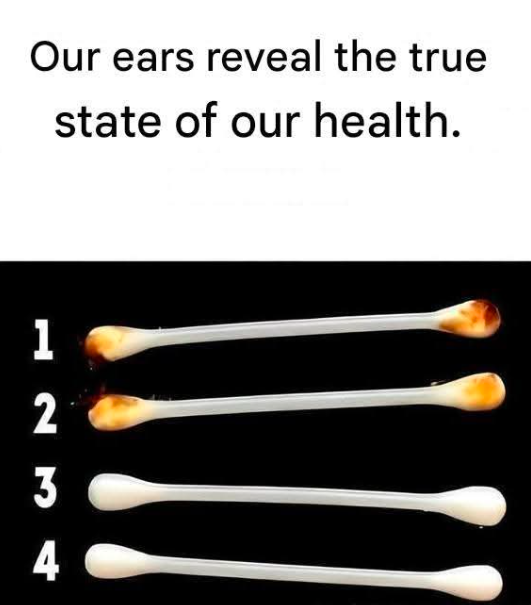
That idea pops up a lot—and while it’s overstated, there is some truth behind it. Your ears can reflect certain health issues, but they don’t give a full medical diagnosis on their own.
Let’s separate fact from myth 👂⬇️
👂 What Your Ears Can Reveal About Your Health
1. Color Changes
- Red ears → heat, embarrassment, inflammation, or high blood pressure (temporary)
- Pale ears → poor circulation, cold exposure
- Yellowish tone → rare, but may relate to liver issues (needs medical evaluation)
2. Ear Creases (Diagonal Earlobe Crease)
- Sometimes called Frank’s sign
- Has been associated (not proven) with increased cardiovascular risk
- Many healthy people have it; many heart patients don’t
➡️ It’s a possible clue, not a diagnosis
3. Earwax Changes
- Too much buildup → blockage, hearing issues
- Very dry or flaky → skin conditions like eczema
- Sudden changes can reflect hormonal shifts or stress
4. Ringing in the Ears (Tinnitus)
- Can be linked to:
- Hearing loss
- High blood pressure
- Stress or anxiety
- Certain medications
- Persistent ringing should be checked
5. Pain or Pressure
- Often caused by:
- Sinus infections
- Ear infections
- Jaw (TMJ) problems
- Not something to ignore if ongoing
6. Cold or Numb Ears
- Usually circulation-related
- Can happen with cold exposure or Raynaud’s phenomenon
⚠️ What Ears Cannot Do
- They don’t diagnose diseases
- They don’t predict lifespan
- They don’t replace blood tests, scans, or exams
Claims that ears “reveal all illnesses” are exaggerated.
🟢 Bottom Line
Your ears can offer subtle clues about circulation, stress, hearing, or inflammation—but they are signals, not answers.
If you notice:
- Sudden changes
- Persistent pain
- Ringing or hearing loss
👉 That’s a reason to check in with a healthcare professional.
If you want, I can also explain:
- Which ear symptoms should never be ignored
- Or common ear myths vs medical facts
Just let me know 👂