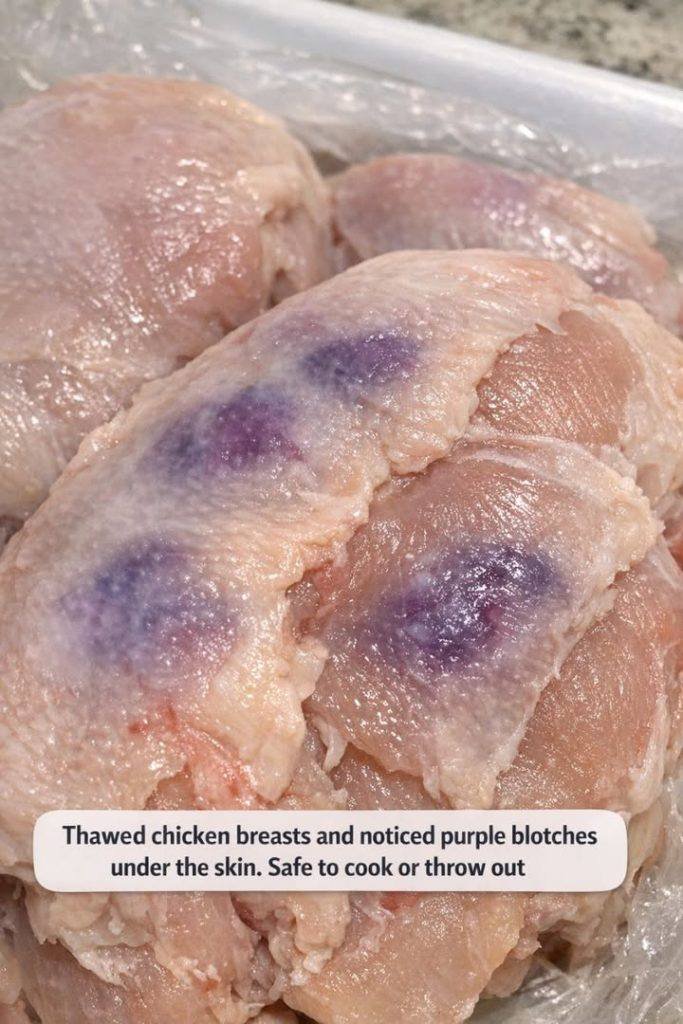
Short answer: it’s often safe — but not always.
Those purple blotches under the skin can be normal or a sign to toss it, depending on what else you see/smell.
Here’s how to tell the difference 👇
🟣 Why Chicken Can Look Purple After Thawing
✅ Most common (usually safe): bruising
- Caused during processing or freezing
- Blood vessels rupture → purple/blue patches
- Very common in frozen chicken breasts
If it’s just localized discoloration and everything else seems normal, it’s usually safe.
⚠️ Less common (not safe): spoilage
Purple/gray blotches can also appear with:
- Bacterial growth
- Poor storage
- Temperature abuse
That’s when you should throw it out.
🧪 Do This Safety Check (Very Important)
✅ Safe to cook if ALL are true:
✔ Smells normal (raw chicken smell only, not sour or rotten)
✔ Texture is firm/slightly moist, not slimy
✔ Color is pink/white overall (purple only in spots)
✔ No green, gray, or rainbow sheen
✔ Not past use-by date and was kept frozen properly
👉 You can trim off the bruised area if it grosses you out.
❌ THROW IT OUT if ANY are true:
❌ Strong sour, sulfur, or “eggy” smell
❌ Sticky or slimy coating
❌ Green, gray, or fuzzy patches
❌ Bloated packaging before opening
❌ You’re unsure how long it thawed at unsafe temps
When in doubt, don’t taste it—raw poultry bacteria aren’t visible.
🔥 Cooking Reminder
If you keep it:
- Cook to 165°F / 74°C internal temp
- Don’t wash raw chicken (spreads bacteria)
🥩 Bottom Line
🟢 Purple blotches alone ≠ unsafe
🔴 Smell, slime, and color changes matter more
If you want, you can tell me:
- Was it vacuum-sealed or tray-packed?
- Any odor at all?
- How long it was thawed and how?
I can give you a more confident yes/no based on that.