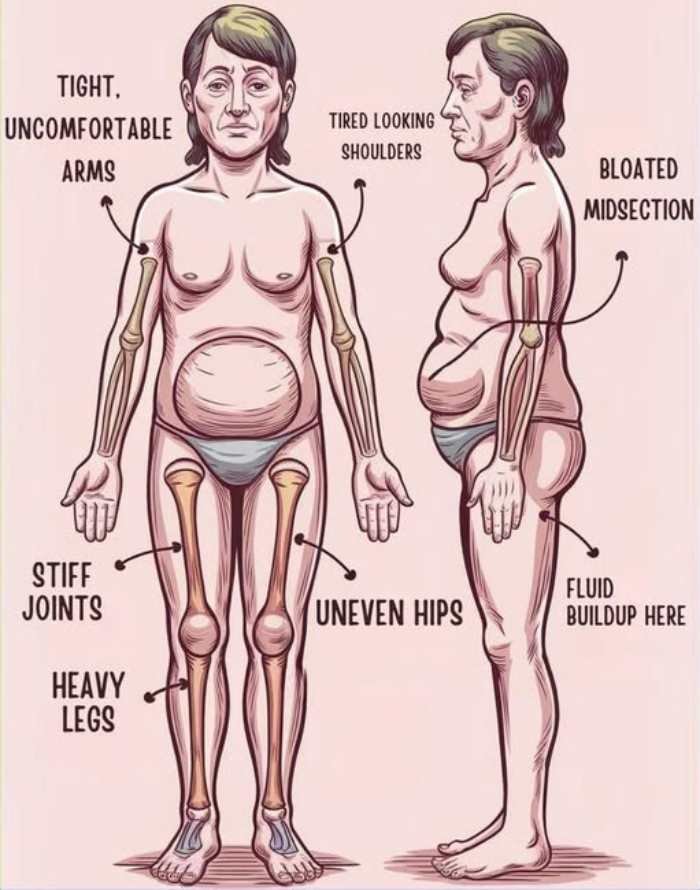
The lymphatic system plays a key role in immune defense and fluid balance. When lymph flow slows or becomes impaired, certain symptoms can show up. It’s important to be clear, though: the lymphatic system doesn’t need to be “detoxed” or “flushed” in a harsh way—it can be gently supported through movement, hydration, and healthy habits.
Here are 7 common signs of lymphatic flow issues, plus safe, natural ways to support lymph movement.
7 Signs Your Lymphatic Flow May Be Sluggish
1. Persistent Swelling (Edema)
- Swelling in the arms, legs, ankles, fingers, or face
- Often worse at the end of the day
⚠️ One-sided or sudden swelling should be medically checked.
2. Frequent Infections
- Getting sick often or taking longer to recover
- The lymph system helps filter pathogens, so sluggish flow can affect immunity
3. Feeling Heavy or Achy
- A sensation of heaviness, stiffness, or dull aching in limbs
- Not related to exercise or injury
4. Enlarged or Tender Lymph Nodes
- Common areas: neck, armpits, groin
- Can occur during infection but should go down afterward
⚠️ Nodes that are hard, fixed, or painless and persist need evaluation.
5. Skin Changes
- Tight, thickened, or puffy skin
- Sometimes dryness or a “doughy” texture
6. Chronic Fatigue
- Ongoing tiredness without a clear reason
- May accompany immune or inflammatory strain
7. Brain Fog or General Malaise
- Feeling sluggish, foggy, or unwell without a clear cause
- Often improves when circulation and movement improve
How to Support Lymphatic Flow Naturally (Safely)
1. Move Your Body Daily
Lymph doesn’t have its own pump—it relies on movement.
- Walking
- Gentle stretching
- Yoga
- Light bouncing or rebounding (if safe for you)
2. Deep Diaphragmatic Breathing
Slow, deep breathing acts like a pump for lymph flow.
- Inhale through the nose
- Exhale slowly through the mouth
- 5–10 minutes a day can help
3. Stay Well Hydrated
Lymph fluid is mostly water.
- Dehydration makes it thicker and slower-moving
4. Gentle Lymphatic Massage
- Light pressure only (lymph vessels are close to the skin)
- Always move toward lymph node areas (neck, armpits, groin)
⚠️ Avoid massage if you have active infection, blood clots, or cancer unless cleared by a doctor.
5. Avoid Prolonged Sitting
- Get up and move every 30–60 minutes
- Even ankle circles or standing helps
6. Eat an Anti-Inflammatory Diet
- Fruits, vegetables, lean protein
- Reduce excess salt, ultra-processed foods, and alcohol
7. Prioritize Sleep
- The lymphatic system (especially in the brain) works most efficiently during deep sleep
When to See a Doctor
Seek medical care if you have:
- Persistent or unexplained swelling
- Enlarged lymph nodes lasting more than 2–3 weeks
- One-sided swelling
- Fever, night sweats, or unexplained weight loss
Bottom line
Lymphatic flow issues are often linked to inactivity, dehydration, inflammation, or illness, not toxin buildup. Gentle daily movement, breathing, hydration, and rest are the safest and most effective ways to support the system.
If you want, I can:
- Help you tell normal lymph node swelling vs. concerning
- Share a 10-minute daily lymph-support routine
- Explain lymphedema vs. temporary swelling
Just say the word.