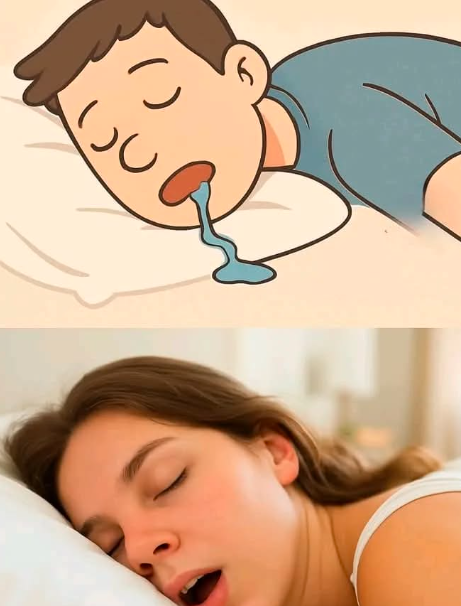
Occasional drooling during sleep is usually harmless. But frequent or excessive drooling (especially if it’s new or worsening) can sometimes point to an underlying health issue. It doesn’t automatically mean disease—but it’s worth paying attention to patterns and other symptoms.
Here are 6 medical conditions commonly linked to chronic drooling during sleep, and how to tell when it matters.
1. Sleep Apnea
Why it causes drooling:
Mouth breathing during sleep increases saliva leakage.
Other signs to watch for:
- Loud snoring
- Pauses in breathing
- Waking up tired or with headaches
- Dry mouth in the morning
👉 One of the most common causes of night drooling.
2. Gastroesophageal Reflux Disease (GERD)
Why it causes drooling:
Acid reflux can trigger excess saliva production (called water brash).
Other signs:
- Heartburn
- Sour or bitter taste
- Throat irritation
- Worse symptoms when lying flat
3. Sinus or Nasal Congestion
Why it causes drooling:
Blocked nasal passages force mouth breathing.
Common causes:
- Allergies
- Chronic sinusitis
- Deviated septum
- Colds or flu
4. Neurological Conditions
Examples include:
- Parkinson’s disease
- Stroke (especially recent)
- ALS
- Multiple sclerosis
Why it happens:
These conditions can affect muscle control and swallowing reflexes.
⚠️ Drooling plus slurred speech, facial weakness, or swallowing difficulty needs medical evaluation.
5. Dental or Oral Health Problems
Why it causes drooling:
- Gum disease
- Mouth infections
- Ill-fitting dentures
- Tooth pain causing mouth to stay open
Saliva may increase as a protective response.
6. Medication Side Effects
Some drugs increase saliva production, including:
- Certain antidepressants
- Antipsychotics
- Alzheimer’s medications
- Sedatives
If drooling began after starting a new medication, this is a strong clue.
When Drooling Is Usually Harmless
- Sleeping on your side or stomach
- Deep sleep phases
- Occasional congestion
- Temporary illness
When to See a Doctor
Seek medical advice if drooling:
- Happens every night
- Is new or worsening
- Comes with trouble swallowing
- Is paired with neurological symptoms
- Causes skin irritation or choking at night
Bottom line
Drooling while sleeping is often caused by mouth breathing, reflux, or congestion, not serious disease. But persistent drooling—especially with other symptoms—deserves a closer look.
If you want, I can also help you:
- Figure out which cause fits your symptoms best
- Share simple ways to reduce drooling tonight
- Explain what’s normal vs. concerning by age
Just tell me 👍