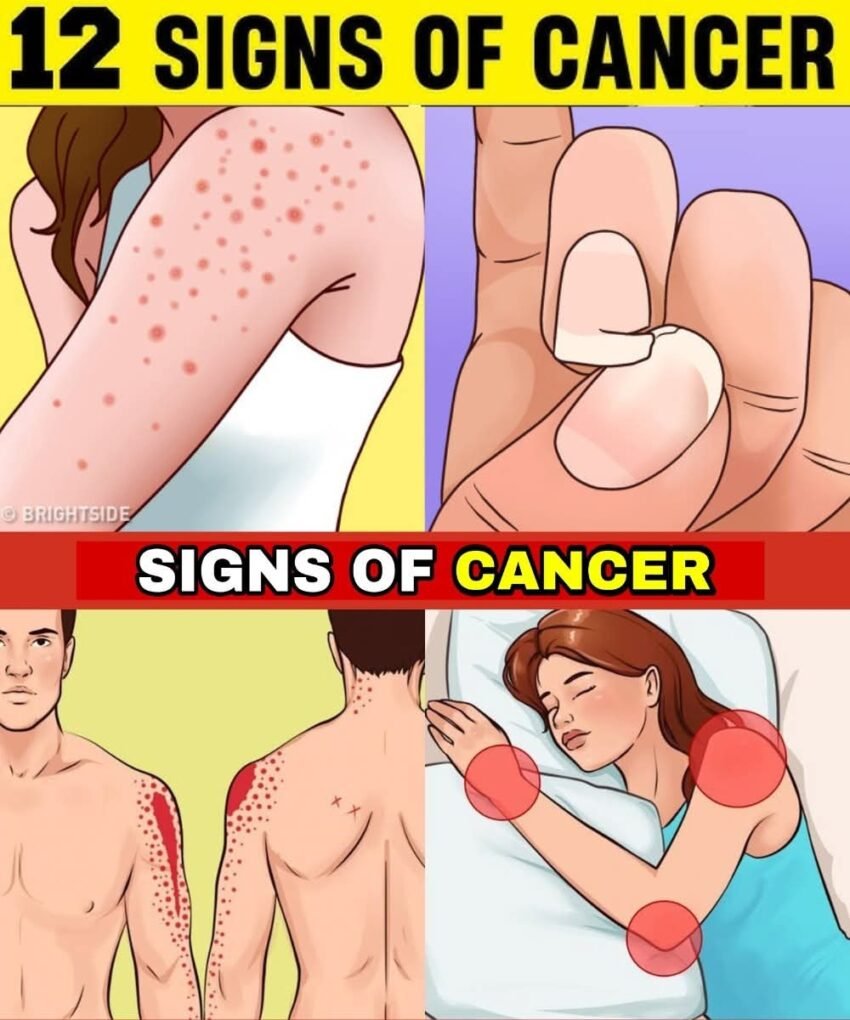
It’s important to be careful with this topic. No single symptom means you have cancer, and many early signs are caused by common, non-serious conditions. However, persistent or unusual changes in your body are worth paying attention to.
Here are 12 possible early warning signs that can be associated with cancer and should be checked by a healthcare professional if they persist, worsen, or appear together.
12 Early Warning Signs to Take Seriously
1. Unexplained Weight Loss
Losing 10+ pounds without trying may be linked to cancers of the pancreas, stomach, esophagus, or lungs.
2. Constant Fatigue
Extreme tiredness that doesn’t improve with rest can occur when the body is fighting cancer or when blood counts are affected.
3. Persistent Pain
Ongoing pain (back, bones, head, abdomen) with no clear cause should not be ignored.
4. Lumps or Thickening
New lumps in the breast, testicles, neck, armpit, or groin should always be evaluated.
5. Changes in Skin
- New or changing moles
- Darkening, yellowing, or redness
- Sores that don’t heal
These may signal skin cancer or internal cancers.
6. Changes in Bowel or Bladder Habits
Long-lasting constipation, diarrhea, blood in stool, or changes in urination can be warning signs of colorectal or bladder cancer.
7. Difficulty Swallowing
Persistent trouble swallowing or feeling food “stuck” may be linked to throat or esophageal cancer.
8. Chronic Cough or Hoarseness
A cough that lasts weeks, coughing up blood, or voice changes can be early signs of lung or throat cancer.
9. Unusual Bleeding or Discharge
- Blood in urine or stool
- Vaginal bleeding between periods or after menopause
- Coughing up blood
10. Frequent Infections or Slow Healing
A weakened immune system from certain cancers can cause recurring infections.
11. Night Sweats or Fevers
Unexplained fevers or drenching night sweats may be linked to blood cancers like lymphoma or leukemia.
12. Loss of Appetite or Feeling Full Quickly
Especially associated with stomach or ovarian cancer.
Important Reality Check
⚠️ These symptoms do not mean you have cancer.
They are signals to get checked, especially if symptoms:
- Last more than 2–3 weeks
- Get progressively worse
- Occur without an obvious cause
- Run in your family history
When to See a Doctor Immediately
- Unexplained bleeding
- A rapidly growing lump
- Sudden weight loss
- Persistent pain or breathing difficulty
Bottom line
Early detection saves lives. Listening to your body and acting early is one of the most powerful tools you have.
If you want, I can also:
- Break down which symptoms match which cancers
- Share screenings by age and risk
- Help you decide when a symptom is urgent vs. watchful waiting
Just tell me.