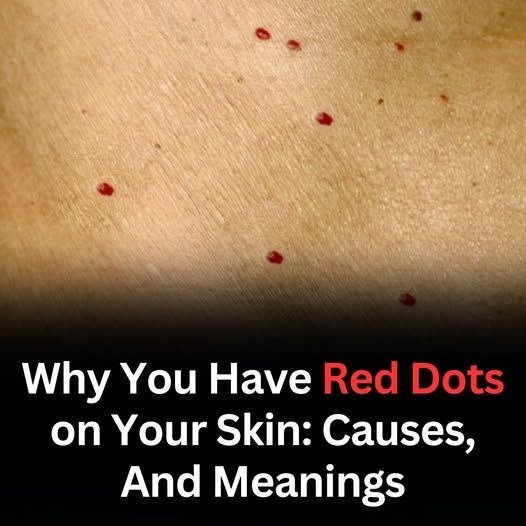
Red dots on the skin are a common concern, and their causes can range from harmless to more serious. Here’s a detailed breakdown of what they might mean, why they appear, and how to address them naturally when appropriate.
Common Causes of Red Dots on Skin
- Petechiae
- Tiny, flat red or purple spots caused by minor bleeding under the skin.
- Can appear in clusters and don’t blanch when pressed.
- Causes: trauma, infections, vitamin deficiencies, or clotting disorders.
- Allergic Reactions
- Red, itchy bumps can appear after contact with allergens (foods, plants, chemicals).
- Often raised and sometimes accompanied by swelling or hives.
- Heat Rash (Miliaria)
- Small red or pink bumps caused by blocked sweat glands.
- Common in hot, humid conditions or after heavy sweating.
- Skin Conditions
- Eczema: Red, inflamed, itchy patches.
- Psoriasis: Red, scaly plaques.
- Keratosis Pilaris: Rough red or skin-colored bumps, often on arms or thighs.
- Infections
- Viral infections: Chickenpox or measles can cause red spots.
- Fungal infections: Can produce red, itchy patches with scaling.
- Blood Vessel Issues
- Broken capillaries: Tiny red dots, often on the face, due to sun, alcohol, or trauma.
- Vasculitis: Inflammation of blood vessels, can appear as red or purple spots.
- Other Causes
- Medications: Certain drugs can trigger red spots or rashes.
- Nutrient Deficiencies: Vitamin C or K deficiency can make the skin more prone to small red dots.
What Red Dots Can Mean
- Harmless: Heat rash, minor allergic reactions, keratosis pilaris.
- Moderate concern: Persistent or itchy rashes, broken capillaries.
- Serious: Petechiae that appear suddenly, widespread red spots, bruising easily, or spots with fever—this requires immediate medical attention.
Natural Relief and Care
- Cool Compress
- Helps soothe irritation or inflammation from rashes or heat rash.
- Oatmeal Baths
- Colloidal oatmeal calms itchy or inflamed skin.
- Aloe Vera
- Anti-inflammatory and soothing for minor rashes or sun-exposed skin.
- Avoid Irritants
- Fragranced soaps, harsh detergents, and tight clothing can worsen rashes.
- Hydration & Moisturizing
- Keeps skin barrier healthy, especially for eczema or keratosis pilaris.
- Diet & Supplements
- Ensure adequate vitamins C, K, and zinc to support skin and vascular health.
When to See a Doctor
- Spots appear suddenly without clear cause.
- Spots are widespread, painful, or accompanied by fever.
- Spots do not blanch (press and release, they stay red or purple).
- Easy bruising or bleeding from minor cuts.
- Red dots persist for weeks despite home care.
Bottom line: Most red dots are harmless and can be managed with simple home care, but persistent, painful, or unexplained red spots should be evaluated medically.
If you want, I can make a quick visual guide showing the different types of red dots and how to tell if they’re serious—it makes it much easier to identify them at a glance. Do you want me to do that?